
Designing with the Microchip AT86RF233-ZUR 4 GHz IEEE 4 Transceiver for Low-Power Wireless Applications
The proliferation of the Internet of Things (IoT) has intensified the demand for robust, low-power wireless connectivity. In this landscape, the Microchip AT86RF233-ZUR emerges as a premier solution, an IEEE 802.15.4-compliant transceiver operating in the 2.4 GHz band, specifically engineered to meet the stringent power and performance requirements of modern embedded designs.
A core strength of the AT86RF233 lies in its exceptional power efficiency. The device features multiple operational states, including a Deep Sleep mode with a current draw of less than 100 nA, making it ideal for battery-powered applications that spend most of their lifetime in a quiescent state. This ultra-low power consumption is managed through precise register control, allowing developers to minimize energy expenditure by rapidly cycling between sleep and active states, thereby extending operational life from coin-cell batteries for years.
The transceiver's architecture is built for reliability. It supports advanced modulation and demodulation techniques (O-QPSK with DSSS) as mandated by the IEEE 802.15.4 standard, providing strong resistance to interference in the crowded 2.4 GHz ISM band. Its integrated 128-bit AES encryption accelerator is a critical hardware feature for securing wireless data links. By offloading complex encryption computations from the host microcontroller, it not only enhances security but also contributes to lower system-level power consumption and frees up valuable MCU resources for application-specific tasks.
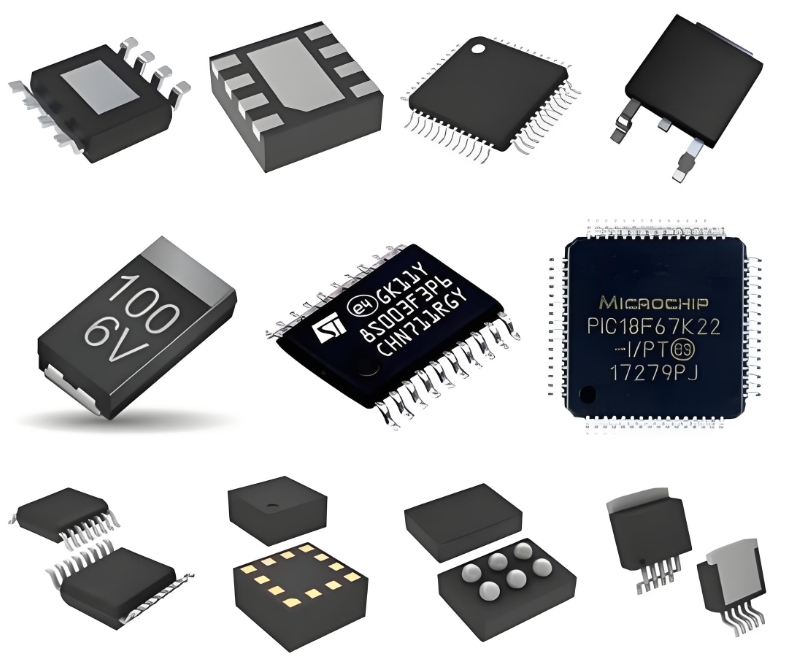
From a design integration perspective, the AT86RF233 simplifies the RF layout process. It requires a minimal number of external components, and its fully integrated radio architecture includes a power amplifier (PA), low-noise amplifier (LNA), and voltage-controlled oscillator (VCO). This significantly reduces both the design complexity and the bill of materials (BOM), accelerating time-to-market. The device interfaces with any host microcontroller via a standard 4-wire SPI, making it a versatile choice for augmenting existing designs with wireless capability.
Successful implementation hinges on careful PCB layout. Designers must adhere to best practices for high-frequency circuits: employing a continuous ground plane, ensuring proper impedance matching for the RF traces, and strategically placing decoupling capacitors close to the supply pins. Furthermore, leveraging the built-in Automatic Transmit and Receive Control functions can further streamline software development and ensure stable link performance.
In conclusion, the Microchip AT86RF233-ZUR transceiver stands as a powerful enabler for a new generation of low-power wireless devices. Its blend of ultra-low power states, integrated security, and robust RF performance makes it perfectly suited for applications ranging from smart sensors and home automation to industrial monitoring and personal area networks.
ICGOODFIND: The AT86RF233 is a top-tier choice for developers prioritizing energy efficiency and reliability in 2.4 GHz IEEE 802.15.4 networks, offering a compelling blend of low-power operation, hardware security, and design simplicity.
Keywords: Low-Power Wireless, IEEE 802.15.4, AES Encryption, Transceiver Design, 2.4 GHz ISM Band

