
**The AD5325ARMZ: A Comprehensive Guide to Microchip's 12-Bit Quad Channel Voltage Output DAC**
In the realm of precision analog signal generation, the ability to accurately convert digital commands into analog voltages is paramount. The **AD5325ARMZ from Microchip Technology** stands out as a highly integrated solution, offering designers a compact and versatile quad-channel Digital-to-Analog Converter (DAC). This device is engineered to deliver precision and performance in a wide array of applications, from industrial automation to communications infrastructure.
**Architecture and Key Features**
At its core, the AD5325ARMZ is a **12-bit, quad-channel voltage-output DAC**. This resolution provides 4,096 possible output levels, striking an excellent balance between precision and cost for many control and calibration systems. Each of the four DAC channels is equipped with its own input register and a DAC register, culminating in a parallel interface structure that allows for simultaneous updates of all outputs via a dedicated LDAC (Load DAC) pin.
A significant feature of this DAC is its **on-chip precision output amplifier**, which is designed to provide a rail-to-rail output swing. This capability ensures that the output voltage can extend to within millivolts of both the supply rails (AVDD and GND), maximizing the dynamic range in low-supply-voltage applications. The device operates from a single **2.5V to 5.5V supply**, making it compatible with both 3.3V and 5V logic systems, a crucial factor for modern mixed-signal designs.
The interface is a standard **3-wire serial peripheral interface (SPI)**—comprising SDIN, SCLK, and SYNC—which facilitates easy communication with microcontrollers, microprocessors, and digital signal processors (DSPs). Its data format is programmable to be either straight binary or two's complement, offering flexibility for unipolar or bipolar output operation when paired with an external amplifier circuit.
**Critical Performance Parameters**
For designers, understanding the key specifications is vital for selecting the right component:
* **DNL (Differential Non-Linearity):** This measures the deviation from the ideal 1 LSB step between consecutive codes. A DNL of less than ±1 LSB is essential for ensuring monotonicity—a guarantee that the output voltage increases consistently as the digital input code increases.
* **INL (Integral Non-Linearity):** This indicates the total deviation of the DAC's transfer function from a ideal straight line. A low INL is critical for overall accuracy.
* **Settling Time:** This is the time it takes for the output to reach and remain within a specified error band of its final value after a major code change. The AD5325ARMZ features a fast settling time, typically around 8 µs to within ±0.5 LSB, which is essential for high-speed applications.
* **Power Consumption:** The device boasts low power operation, typically consuming 0.7 mW at 3 V, making it suitable for **power-sensitive and portable applications**.
**Application Spectrum**
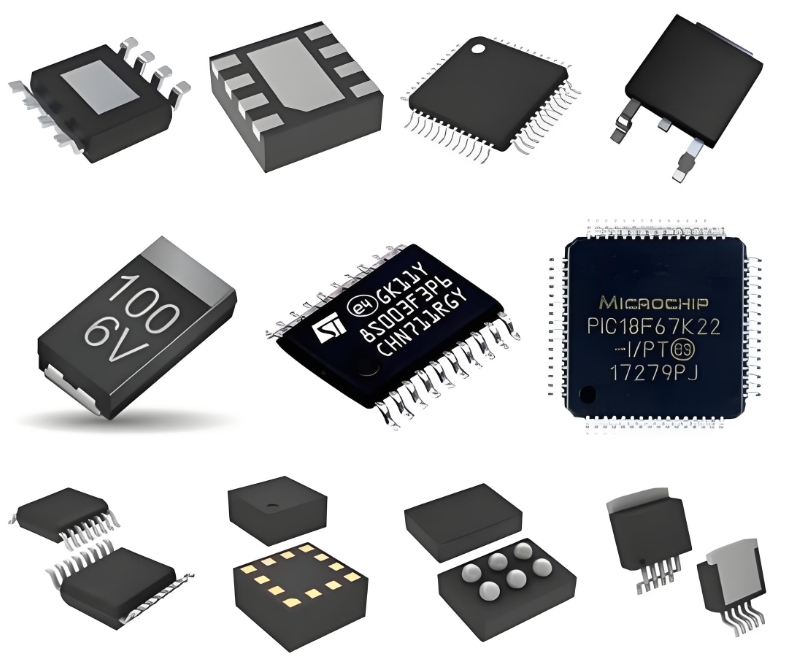
The combination of quad channels, 12-bit resolution, and a small MSOP-16 package makes the AD5325ARMZ exceptionally useful in space-constrained systems requiring multiple analog control points. Its primary applications include:
* **Process Control and Automation:** For setting precise voltage references, bias points, and programmable gain control.
* **Data Acquisition Systems:** Acting as a key component for generating calibration voltages and automated test equipment (ATE).
* **Digital Control Loops:** Providing the analog output needed to control actuators, motors, and other physical elements.
* **Portable Instrumentation:** Where its low power consumption and small form factor are major advantages.
**Design Considerations**
Implementing the AD5325ARMZ effectively requires attention to several design aspects. **Proper decoupling** is critical; a 0.1 µF ceramic capacitor should be placed as close as possible to the AVDD pin to mitigate noise from the power supply. For the most stable output voltage, a low-impedance external reference voltage should be used. Furthermore, the digital and analog grounds must be planned carefully, typically with a single-point star ground connection, to avoid noise coupling from the digital signals into the sensitive analog output.
**ICGOODFIND**
ICGOODFIND: The **AD5325ARMZ** emerges as a robust and highly integrated solution for multi-channel analog output needs. Its combination of **12-bit accuracy, quad-channel output, and flexible serial interface** in a miniature package provides an outstanding value proposition. For engineers designing systems in industrial, communications, or portable markets, this DAC represents a compelling choice that balances performance, size, and power efficiency effectively.
**Keywords:**
1. **12-Bit DAC**
2. **Quad Channel**
3. **Voltage Output**
4. **SPI Interface**
5. **Rail-to-Rail Output**

