
Microchip ATMXT1664T3-CCU035 Touch Controller: Features and Application Design Considerations
The Microchip ATMXT1664T3-CCU035 represents a highly integrated and advanced capacitive touch controller, designed to meet the demanding requirements of modern user interfaces across a wide range of applications, from automotive center consoles and industrial control panels to premium home appliances. Its architecture is built to deliver exceptional signal-to-noise ratio (SNR) and robust performance even in challenging, noisy environments.
A core feature of this controller is its support for mutual and self-capacitance sensing. This dual approach provides designers with significant flexibility. Mutual capacitance is ideal for detecting multiple simultaneous touches (multi-touch), while self-capacitance offers higher sensitivity for detecting touches through thicker overlays or even gloved hands. The device can dynamically manage these modes, optimizing performance for the specific use case.
Robust noise immunity is a critical strength. The controller incorporates sophisticated hardware and firmware algorithms to mitigate various types of electrical noise, including in-cell noise from displays and low-frequency charger noise. This ensures reliable touch detection without false triggers, a non-negotiable requirement in safety-critical applications like automotive systems.
Furthermore, the device supports a high number of nodes, enabling complex and large touch surfaces. It features advanced gesture recognition and can be configured to support a variety of gestures (swipes, pinches, rotates), enriching the user experience. Its low-power management capabilities make it suitable for always-on applications, where waking a system from a sleep state via a simple touch is essential.
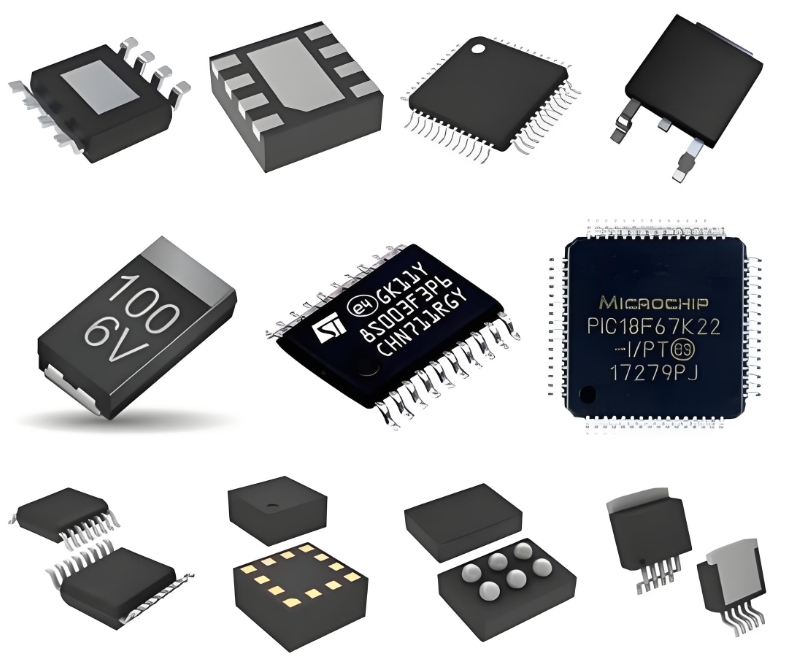
From a design perspective, several considerations are paramount for successful implementation. Careful sensor pattern design is the foundation of performance. The shape, size, and pitch of the electrodes must be optimized for the specific cover lens thickness and dielectric material to ensure optimal sensitivity.
Proper grounding and shielding are equally vital. To maintain high SNR, the touch sensor must be effectively shielded from noise sources, particularly the display. This often involves implementing a dedicated shield layer between the touch sensor and the LCD, which is driven by the controller to actively counteract noise coupling.
The choice of cover lens material and thickness directly impacts performance. While the controller can handle thicker materials, the dielectric constant and thickness of the overlay (typically glass or polycarbonate) must be accounted for during the sensor tuning process in the factory.
Finally, leveraging Microchip's comprehensive development tools, such as the Atmel Studio IDE and the QTouch® Configurator, is highly recommended. These tools streamline the process of configuring the device's parameters, tuning the touch thresholds, and diagnosing potential issues, significantly reducing development time and effort.
ICGOODFIND: The Microchip ATMXT1664T3-CCU035 is a premium touch controller solution that excels in challenging environments. Its blend of high-noise immunity, support for multiple sensing modes, and advanced features like gesture recognition makes it a powerful choice for designing intuitive and reliable human-machine interfaces (HMIs). Success hinges on meticulous attention to sensor design, noise mitigation, and leveraging the manufacturer's support tools.
Keywords: Capacitive Touch Controller, Noise Immunity, Mutual Capacitance, Signal-to-Noise Ratio (SNR), Gesture Recognition.

